The engagement, the hours, the invoice — and the relationship after the project ends
Scope it, staff it, track the hours, bill the SOW, and keep the client after the last deliverable: the quarterly check-ins you promised, on a cadence, with a health score that tells you when an account is going quiet.
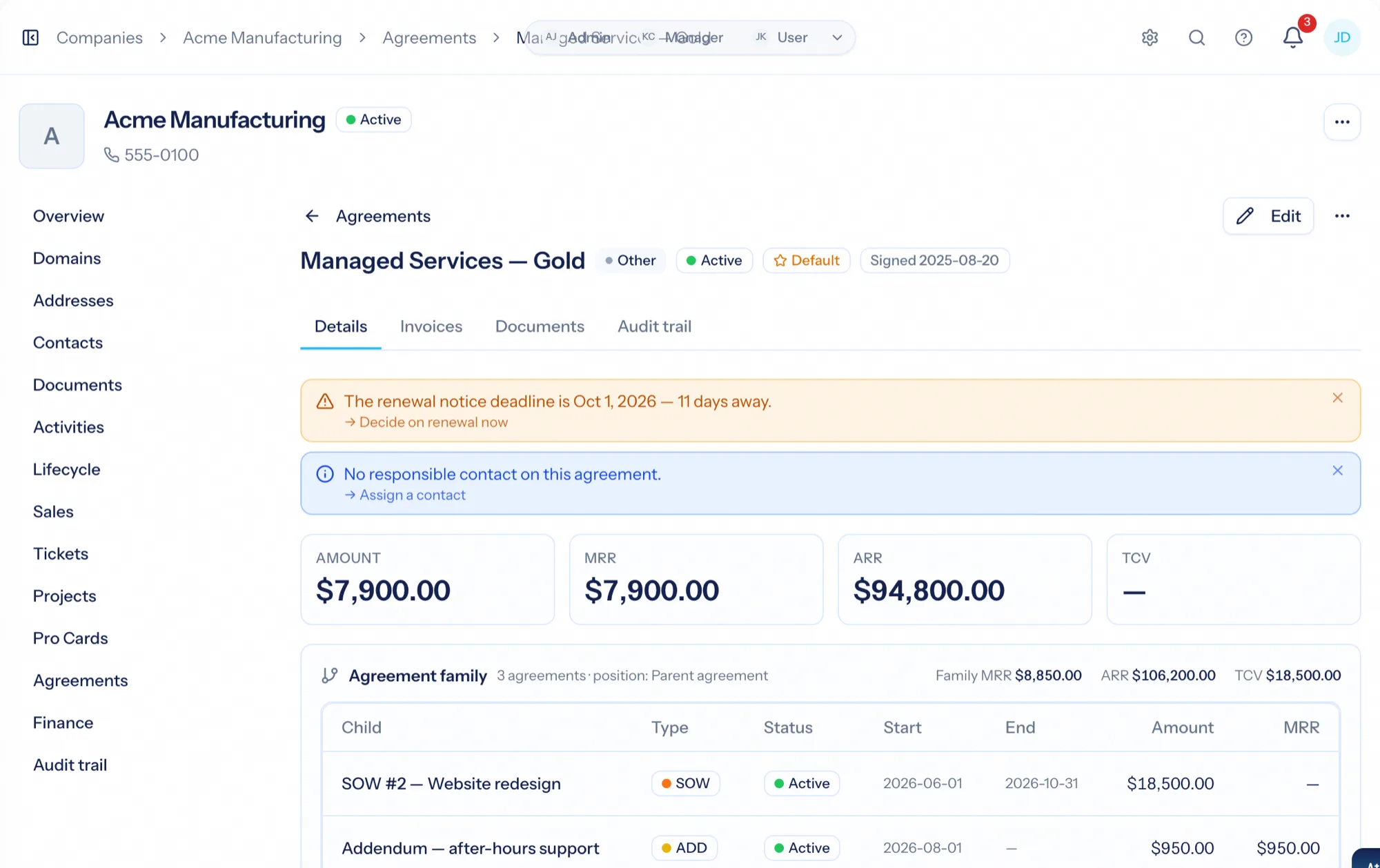
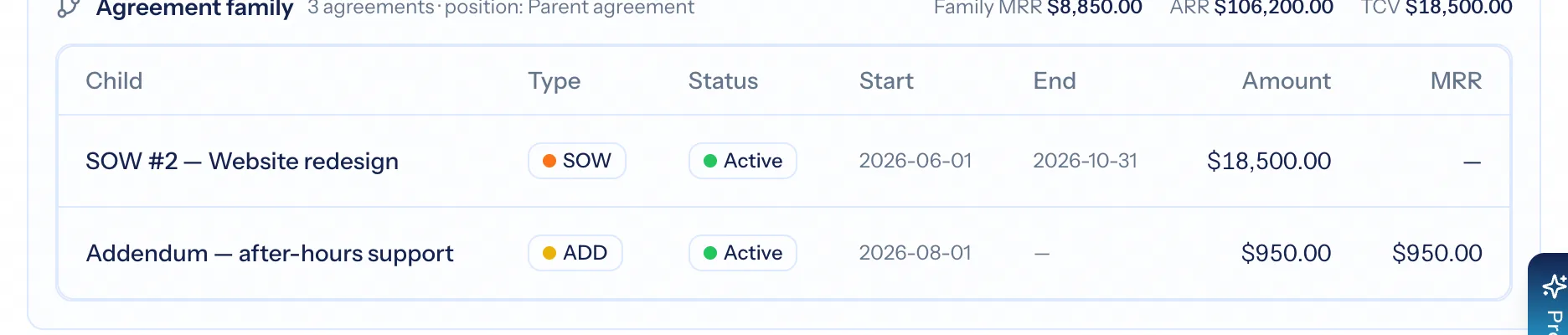
Consulting firms run on agreements: a master services agreement, the statements of work under it, the addendum for the extra phase, the renewal that carries the relationship into next year. AspirePro models that as a family — children inherit from the parent, the family's recurring revenue rolls up, newer paper supersedes older paper — and hangs the time, the invoices and the relationship work off the same client. Utilization, capacity and return on time read from the same hours.
MSA → SOW → addendum → renewal, as a tree
Every document with its own dates and money, inheriting what it doesn't override. Revenue at risk shows what is past its paper.
Billable share, idle time, and the forecast
Expected hours per person, logged time approved weekly, capacity that already knows about approved time off.
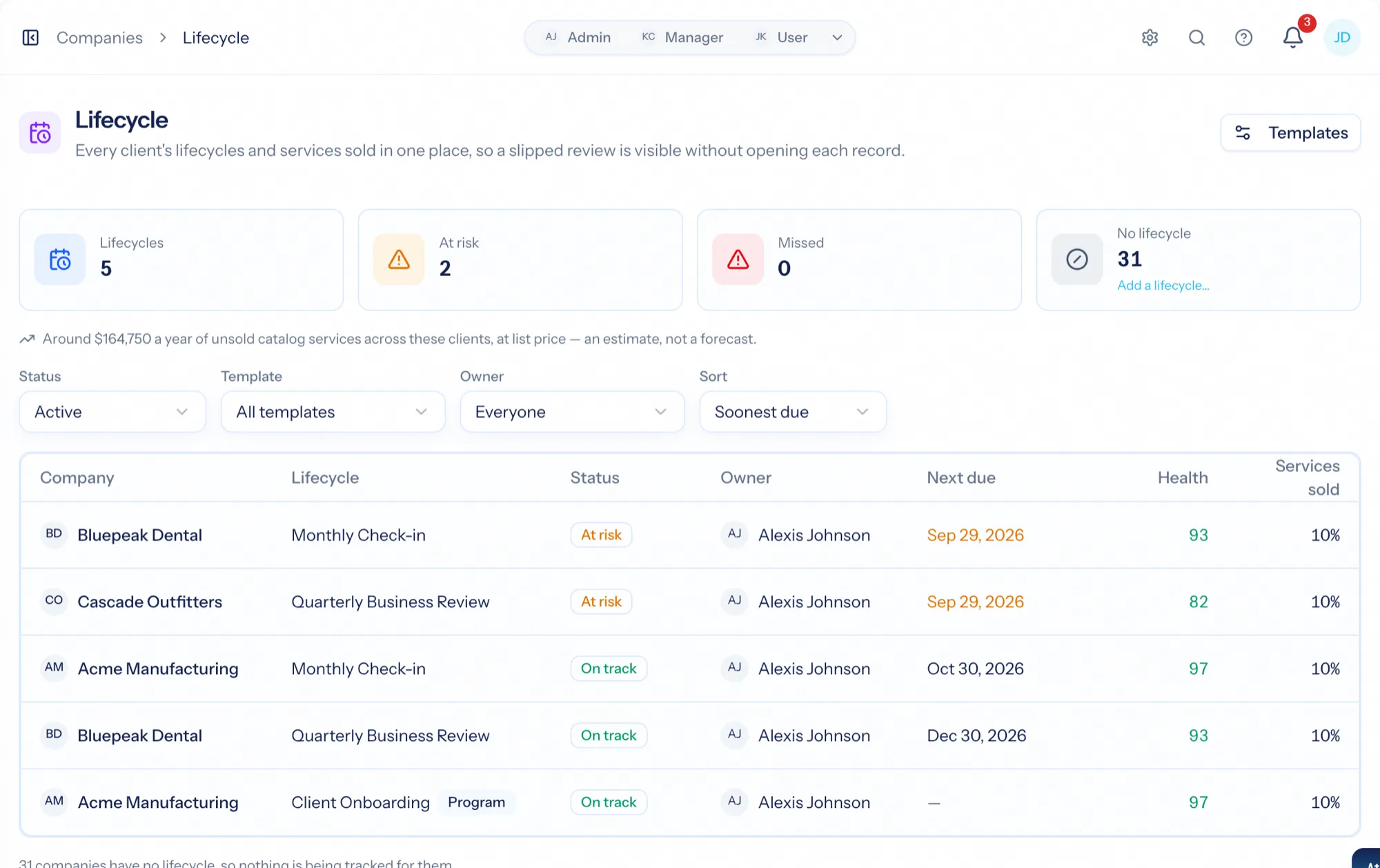
Check-ins on a cadence, and a score
Lifecycle templates turn 'we should do a QBR' into a scheduled, attested period; client health tells the partner when an account slips.
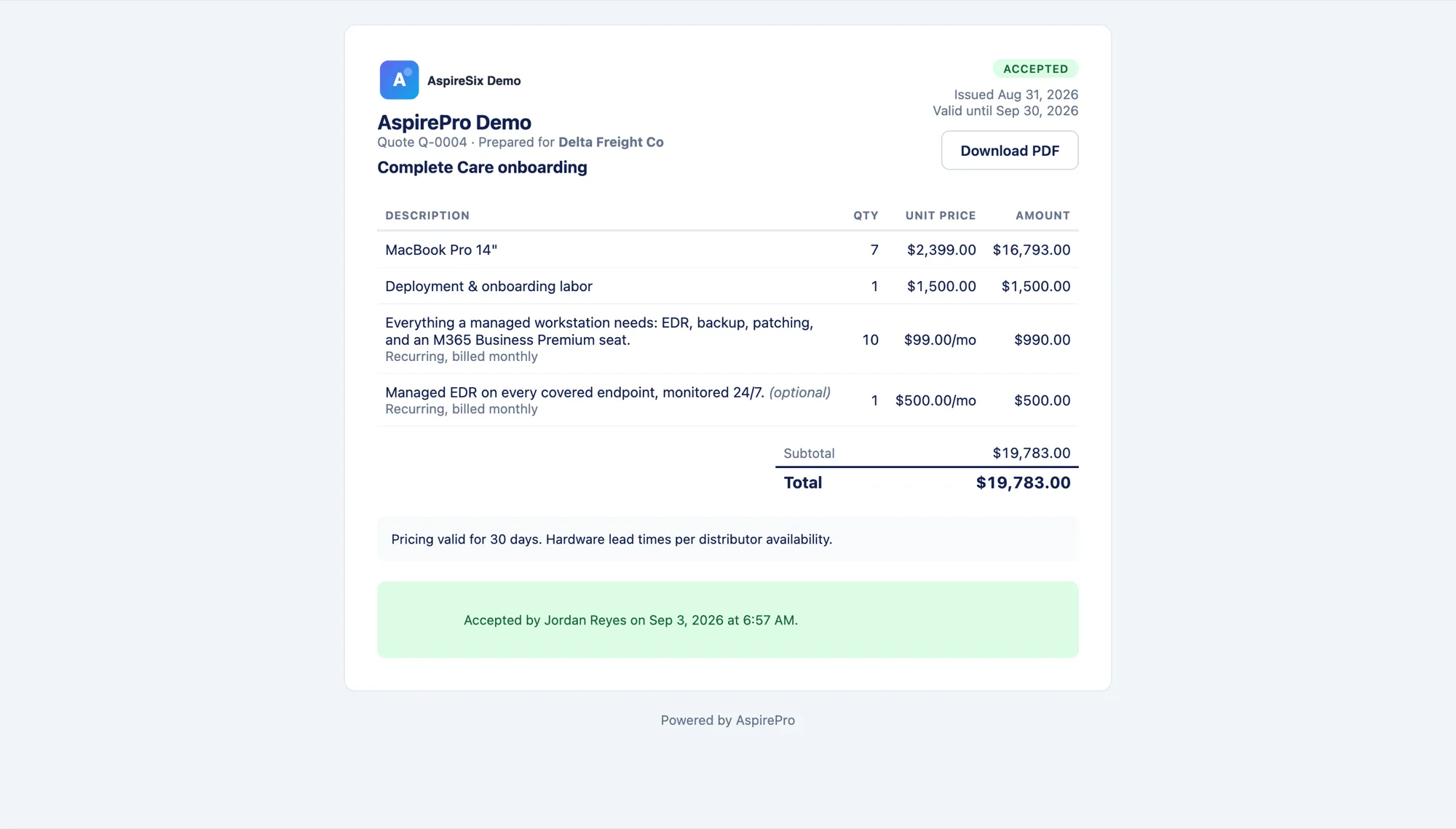
Proposals from a catalogue, accepted with a signature
Quote the engagement from your service catalogue — fixed-fee phases, hourly blocks, a recurring advisory retainer — send the branded PDF, and let the client accept on a hosted page. Conversion creates the agreement and the first invoice priced exactly as accepted.
- One-time and recurring lines kept apart
- Typed-signature acceptance on the record
- Approval threshold for large quotes
Master agreements and the statements of work beneath them
A family of agreements with inheritance and supersession, client-specific rates per role, included hours with overage, and Agreement vs. Reality for every fixed fee — so a forgotten quarter is found while it can still be invoiced.
- Work-role rate overrides per client
- Status moves on schedule: active, expiring, expired
- Revenue at risk beside every recurring figure
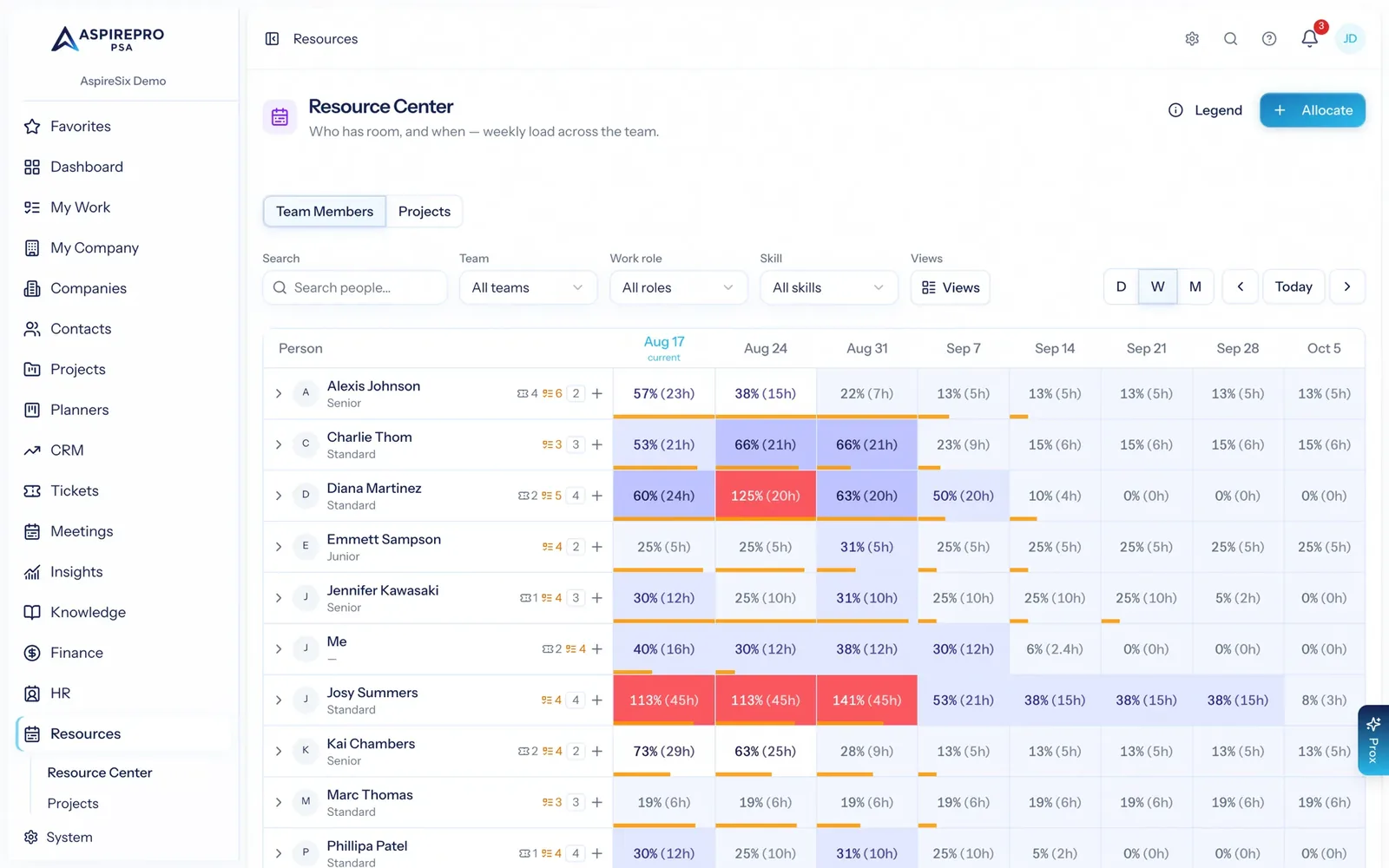
Capacity, bookings and utilization
Book people to engagements by week, see the heatmap of who is over and under, and read utilization against target. Approved time off leaves capacity automatically; the plan never pretends someone is here.
- Bookings and busy-ness by person and week
- Utilization and idle time against targets
- Time off already removed from capacity
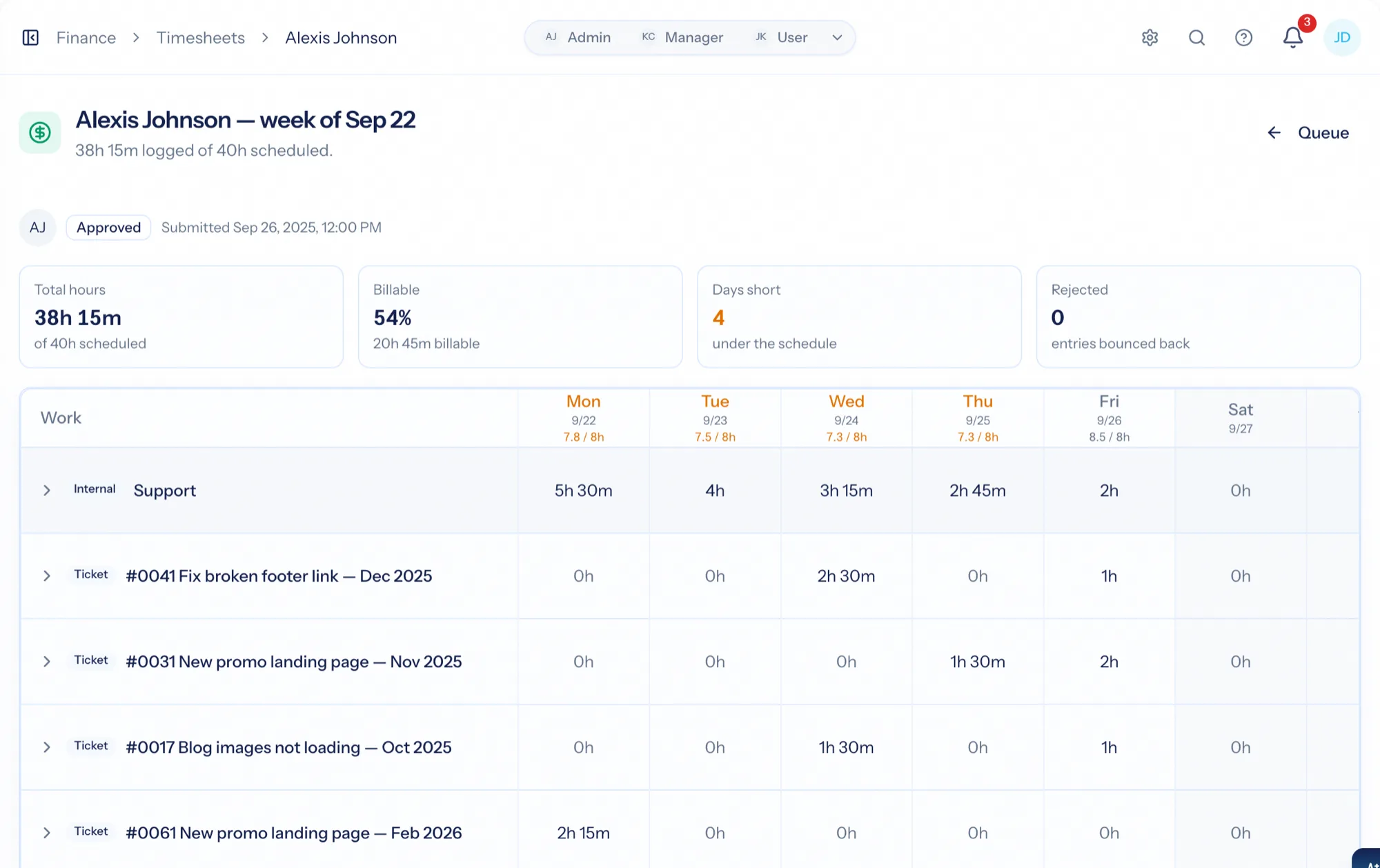
Hours to invoice, approved first
Consultants log time where they work; the week is submitted and reviewed entry by entry; approved billable hours become work in progress under the SOW at this client's rates. Expenses ride along. Push to QuickBooks or Xero.
- Weekly timesheet review with per-entry rejection
- WIP pulled onto the invoice at client rates
- Expense reimbursements and pass-through
The relationship after the deliverable
Attach a lifecycle to the client — quarterly business review, monthly check-in — and the periods are scheduled, owned and attested. Missed periods are the largest input to the client health score, which notifies the owner when an account drops a band.
- Lifecycle templates with goals per period
- Attestation that the work was done
- Client health from six real signals
An engagement, start to renewal
Propose
Quote from the catalogue; the client signs online.
Contract
MSA and SOW as a family, rates per client.
Deliver and bill
Time approved weekly, invoiced under the SOW.
Keep
Check-ins on a cadence, health score watched, renewal on time.
What you'd use most
Every module reads the same clients, people and permissions — switch on the ones you need.
Frequently asked questions
Does it handle master agreements with multiple SOWs?
Can rates differ by client and by role?
How does utilization work?
What happens after the project ends?
Do we need the service desk?
Bring your whole services business together
Stop stitching together five tools. Run sales, delivery, support, and billing from one organization — with an AI assistant on every page.